
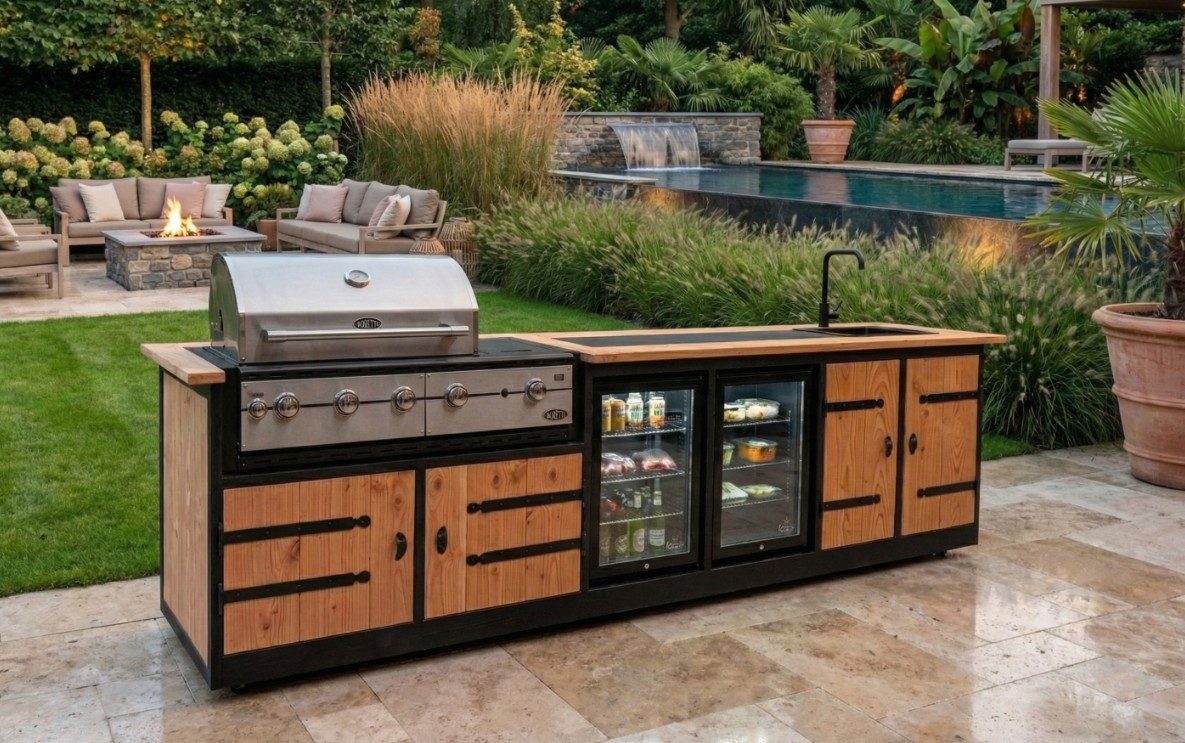
Cooking outdoors often goes hand in hand with larger quantities, impulse buys and less overview of what's still in the fridge. That makes the outdoor kitchen a place where food waste easily happens – but with a few mindful habits, it's also easy to prevent.
What do you do with leftover vegetables on the barbecue?
It starts before you put anything on the barbecue at all. If you shop without a plan for an evening of outdoor cooking, you'll soon buy too much or the wrong things. The most effective way to prevent waste is to work the other way round: first look at what you already have in the house and build the menu around it.
Leftover vegetables are perfect for grilling. Half a courgette, a few peppers that are nearly past their date, a handful of mushrooms – on the barbecue they turn out better than in the pan. Marinate them an hour beforehand and they become the centrepiece of the meal rather than a side dish you quickly throw together.
How do you stop meat going wrong on the barbecue?
Cooking outdoors is less predictable than indoors – wind, outside temperature and distance from the fire affect cooking in ways you don't always see coming. A meat thermometer takes the guesswork out. The right core temperatures per type of meat:
- Beef: 55 to 60 degrees for medium rare
- Pork: at least 70 degrees
- Chicken: at least 75 degrees
- Fish: around 60 degrees, just no longer translucent but still full of flavour
For thicker cuts of meat such as a thick entrecôte, a whole chicken breast or a pork tenderloin, the two-zone method works best: one side of the barbecue direct at high temperature, the other side indirect without direct heat underneath. Start indirect until the core is nearly up to temperature, and finish briefly over direct heat to form a crust. That way you avoid a burnt outside with a raw inside – the most common reason meat ends up in the bin instead of on the plate.
How much meat per person for a barbecue?
When eating outdoors, there's a strong temptation to make too much – to be sociable, in case someone else turns up, or simply because larger quantities are easier to grill. But leftover grilled meat or fish is harder to use up than raw leftovers.
A handy rule of thumb: for a main meal, allow 150 to 200 grams of meat or fish per person and top up with vegetables and side dishes. It's better to make a little less and grill some more later if needed – that's much easier with an outdoor kitchen than with an ordinary barbecue.
What can you make with leftovers after a barbecue?
An outdoor kitchen with a gas hob or induction hob is perfect for using up leftovers. Leftover rice becomes nasi goreng, yesterday's grilled vegetables go into a frittata, and a leftover piece of meat becomes a salad or wrap the next day.
The combination of grill and hob makes the outdoor kitchen more flexible than most people use it. You don't always have to come up with a completely new menu – sometimes cooking outdoors is simply the tastiest answer to whatever's still in the fridge.
Checklist: preventing food waste when cooking outdoors
| When | What to do | Why |
| Before cooking | Check the fridge and build the menu around what's already there | Vegetables that are nearly past their date turn out better on the grill than in the pan |
| When shopping | Make a list based on the menu, not on gut feeling | Impulse buys for outdoor cooking are the biggest source of waste |
| When marinating | Always set aside part of the marinade separately | Marinade that has been in contact with raw meat is no longer safe to reuse |
| When portioning | Allow 150–200 grams of meat or fish per person, top up with vegetables and side dishes | Raw meat can still be grilled later; leftover grilled meat is harder to use up |
| While grilling | Use a meat thermometer and work with indirect heat for thick cuts | Overcooked or burnt meat is the most common cause of waste at a barbecue |
| After cooking | Leftovers into a sealable container in the fridge within two hours | Above 7 degrees bacteria grow quickly – especially on warm summer evenings |
| The next day | Use leftovers in a frittata, wrap or salad | Grilled vegetables and meat are at least as tasty the next day, cold or reheated |
How long can you keep grilled meat?
Food that has been standing outside needs to go back in the fridge quickly. Bacteria grow fast at temperatures between 7 and 60 degrees – and on a warm summer evening you'll soon be in that range. Put leftovers in the fridge within two hours of cooking, use well-sealed containers and eat them the next day.
Throw away marinades and sauces that have been in contact with raw meat or fish – they're not safe to keep or reuse. Always set aside some extra marinade in advance, so that you can keep that for next time.