
Wood out in the open needs protection, but that doesn't have to mean chemical gunk. Natural oils nourish the wood from within, protect against moisture and UV rays, and let the material breathe. For a wooden outdoor kitchen made of Douglas fir, that's essential: the wood needs to keep its character and last for decades. Synthetic varnishes and coatings, on the other hand, form a sealing layer that cracks, flakes and then traps moisture. In this blog you'll read which natural oils really work, how often you need to treat the wood and why this is the smartest choice for sustainable maintenance.
Why natural oil is better than a synthetic coating
The difference lies in how the protection works. Synthetic varnishes and stains form a layer on top of the wood. That seems handy, but as soon as there's a small crack in it, moisture gets in and can't get out again. The result: rot from the inside while the outside still looks perfectly fine.
Natural oil, by contrast, soaks into the wood. It fills the pores, drives out moisture and keeps nourishing the wood from within. That way Douglas fir can still breathe, expand and shrink with the seasons without cracks forming. What's more, you don't have to sand everything down first when doing maintenance. You simply apply a new coat that reinforces the previous one.
For an outdoor kitchen that stands outside all year round, this is crucial. You want protection that moves with the weather, not protection that fights against it. And that's exactly what natural oil does.

Linseed oil: the classic choice for Douglas fir
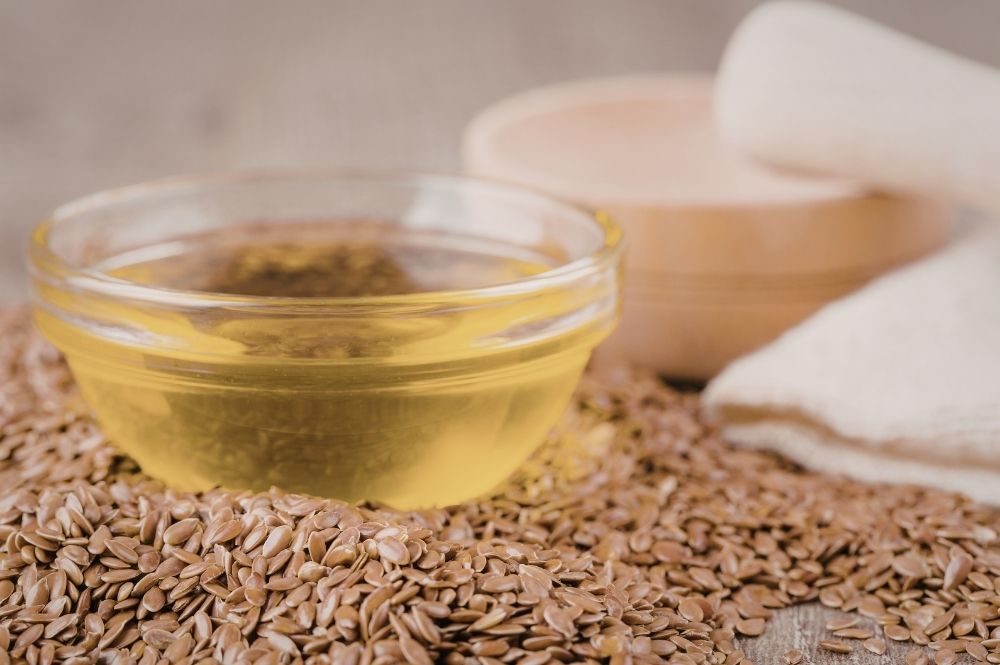
Linseed oil is the most widely used natural oil for an outdoor kitchen made of Douglas fir, and there's a reason for that. It soaks deep into the wood, hardens into a protective layer and gives Douglas fir a warm, rich colour. Linseed oil comes in two varieties:
Raw linseed oil:
- Soaks deep into the wood for maximum nourishment.
- Drying time: several weeks.
- Ideal for projects where you have time.
- Less suitable for an outdoor kitchen that is used regularly.
Boiled linseed oil:
- Dries within 24 hours (heated with driers, not actually boiled).
- More practical for outdoor kitchens that need to be back in use quickly.
- Soaks in within a few hours.
- Easier to maintain.
The only drawback of linseed oil is that it isn't UV-resistant. Without pigments, your Douglas fir will turn grey more quickly. That's not a problem in itself, as many people actually love that natural greying, but if you want to keep the original colour, combine linseed oil with a UV filter or choose an alternative.
Hardwax oil: protection with a matt finish
Hardwax oil combines natural oils with plant-based waxes. The result is a protective layer that penetrates deeper than oil alone while leaving a light wax layer that repels water. This is ideal for worktops and counter areas of your outdoor kitchen.
The matt, natural finish gives Douglas fir a luxurious look without shine. Hardwax oil is also water-repellent and dirt-repellent, which makes maintenance easier. You simply wipe away a stain, and after a year you just apply a new coat over the old one. Do pay attention to the composition, though. Some hardwax oils contain synthetic additives. Choose brands that are transparent about their ingredients and are genuinely 100% natural. Then you can be sure your choice matches your sustainable values.
Comparison of natural protective products for Douglas fir
| Product | Drying time | Water-repellent | UV protection | Frequency | Finish |
| Boiled linseed oil | 24 hours | Moderate | None | Once a year | Matt/saturating |
| Hardwax oil | 12–24 hours | Good | Optionally added | Once a year | Matt |
| Teak oil | 24–48 hours | Good | Limited | 1–2 times a year | Glossy |
| Natural stain (with pigment) | 12–24 hours | Very good | Good | Every 2–3 years | Matt/opaque |
How often should you treat a wooden outdoor kitchen?
The frequency depends on your climate and how you use it. In the Netherlands, where rain and changing temperatures are the norm, you should ideally treat your Douglas fir outdoor kitchen once a year. Do this in spring, after you've cleaned the winter grime off the wood and it has had a few dry days. For worktops that come into a lot of contact with water and food, you can treat them twice a year: in spring and after the summer. That keeps the protection at its best and prevents moisture from taking hold in the places where you work a lot.
The great thing about natural oil is that you never have to sand. You clean the wood with water and green soap, let it dry and apply a new coat. It soaks in, reinforces the previous treatment and you're done. No hassle, no mess, and you'll be finished in an hour or so.
Application: how to do it properly
Applying natural oil is simple, but a few rules make all the difference. Start with clean, dry wood. Use a brush or a cloth and work the oil in well, following the grain of the wood. Don't apply too much at once; it's about several thin coats, not one thick one.
Let the first coat soak in for 15 minutes and then wipe off any excess oil with a clean cloth. Otherwise you'll get sticky patches that don't harden. After a few hours, apply a second coat in the same way. For optimal protection you can apply a third coat, especially on worktops and areas that see a lot of moisture.
Preferably work on a dry day with temperatures above 10 degrees. Too cold and the oil won't soak in properly. Too damp and it won't dry out. And don't forget: oily rags can spontaneously combust. Leave them to dry spread out flat or store them in a sealable metal bucket with water.