
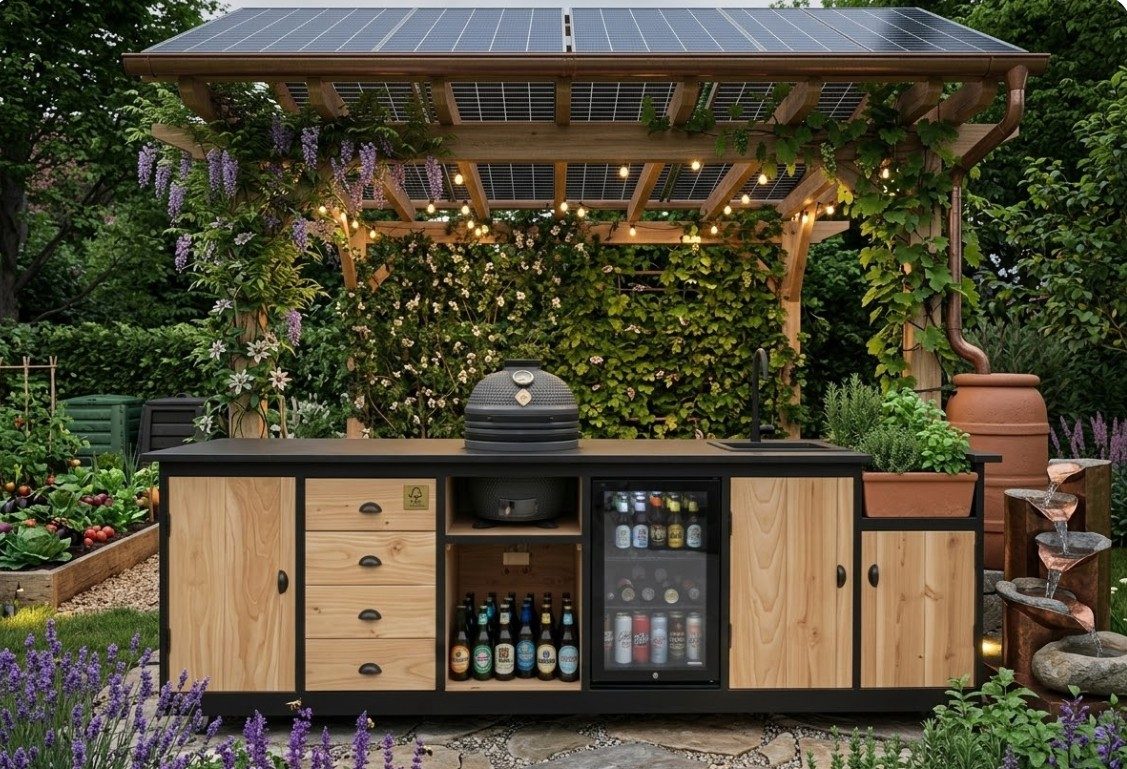
Applying biophilic design to an outdoor kitchen starts with a simple idea: the cooking area shouldn't stand next to the garden, but in it. That means making choices about materials, planting, light and sound that deliberately blur the boundary between kitchen and nature. In this blog, five principles to make that concrete.
Why the outdoor kitchen is the perfect place
An outdoor kitchen isn't an appliance you just put down. It's a meeting point for your family, friends and the seasons. If you design that space consciously, it reinforces exactly the values you already strive for: sustainability, mindful living and enjoying what the earth provides. Biophilic design and sustainable choices also go hand in hand. Natural materials, native plants, rainwater: the principles reinforce one another.
5 biophilic design principles for your outdoor kitchen
1. Start with an honest material as the base
A Douglas fir outdoor kitchen already has something biophilic about it. Wood is a living material – it has a scent, a texture and a colour that changes with the seasons and the years. That's not a drawback; that's exactly the point.
What you can then build on:
- A stone worktop complements the warmth of the wood beautifully and adds an earthy, robust feel.
- Terracotta tiles as a floor or wall finish around the kitchen: handmade and full of character.
- Natural stone or gravel as paving around the kitchen visually connects the cooking area with the garden.
Avoid: completely sealing wooden surfaces with harsh, synthetic coatings. Choose natural oils that let the wood breathe and protect it.
2. Integrate plants as a structural element – not as decoration
In biophilic design, plants aren't an accessory. They're part of the architecture.
Herb garden as an extension of the kitchen island Build a raised bed right next to your outdoor kitchen. Rosemary, thyme, basil and lemon balm grow within arm's reach of your chopping board. Practical and sensory: the scents enhance the cooking experience.
Green wall as a windbreak or privacy screen Instead of a wooden fence: a planted pergola or living wall of climbers (ivy, Virginia creeper, passion flower). It provides shade in summer, shelters you from the wind and creates visual calm.
Fragrant borders as a frame Lavender, salvia and perennials along the edges of your kitchen zone attract bees and butterflies. You're cooking in an ecosystem rather than next to one.
3. Make use of water features too
Water is a core element of biophilic design, both visually and audibly. The sound of running water has been shown to reduce stress.
- Small fountains or a water table next to the barbecue or dining area create a soothing background sound.
- Visible rainwater harvesting: connect a water butt to your pergola or canopy. Make it an aesthetic feature – functional and a conversation starter.
- A small pond or stream as a divider between the cooking zone and dining zone adds depth to the space.
4. Positioning based on light
Biophilic design works with the movement of the sun, not against it. Position your outdoor kitchen so that you cook in the shade in the morning and can enjoy the low sun in the evening. An open pergola with climbing plants helps here: in summer the foliage filters the harsh light, while in winter the bare wood lets more through.
When the sun goes down, you don't want a cold outdoor light that kills the atmosphere. Warm white light of around 2700 to 3000 Kelvin is reminiscent of campfire light and matches the natural transition from day to evening. Think in layers: ground spotlights along the path, candles on the table, a pendant light above the dining area. Cold bluish-white light not only spoils the atmosphere but also disrupts your biorhythm – and your body feels that, even if you don't consciously notice it.
5. How to fit scent and sound into this design
Biophilic design doesn't stop at what you see. Put lemon balm, lavender or jasmine close to your work area and you'll literally be cooking surrounded by fragrance – subtle enough not to overpower, strong enough to enrich the experience.
Sound is just as important. Douglas fir absorbs ambient noise in a way that concrete and metal don't – it creates warmer, calmer acoustics that you may not consciously notice, but you do feel. Alternate hard paving around the kitchen with grass, gravel or moss-filled joints. That dampens reflected sound and softens the transition between kitchen and garden, both literally and figuratively.
The overlap between biophilic principles and sustainability
| Biophilic principle | Sustainable version |
|---|---|
| Wood as base material | FSC-certified Douglas fir |
| Water feature | Connected to rainwater harvesting |
| Lighting | LED with warm light and motion sensor |
| Plants | Native species (need little water, good for biodiversity) |
| Worktop | Natural stone – durable and timeless |
Step-by-step plan for applying the principles to your outdoor kitchen
You don't have to redesign your outdoor kitchen in one go. Biophilic design lends itself perfectly to a step-by-step approach:
- Start with plants: add a herb garden or plant climbers along an existing fence.
- Adjust your lighting: replace cold light with warm white LED.
- Add water: even if it's just a small terracotta fountain.
- Think about your surroundings: how does the kitchen connect with the greenery around it?
Every step brings your outdoor kitchen closer to a place that's not only functional, but also feels like coming home.